
Vehicle dynamics
Chassis, suspension, tyre and damper direction with a human in the loop rather than pure simulation.
Industries · Automotive
The driver's inputs feed a vehicle model. The model drives the platform and the visuals. The driver feels the result and reacts. The loop only teaches the car anything if what the driver feels is what the model actually said — which is a statement about transport delay, not about stroke length.
The loop
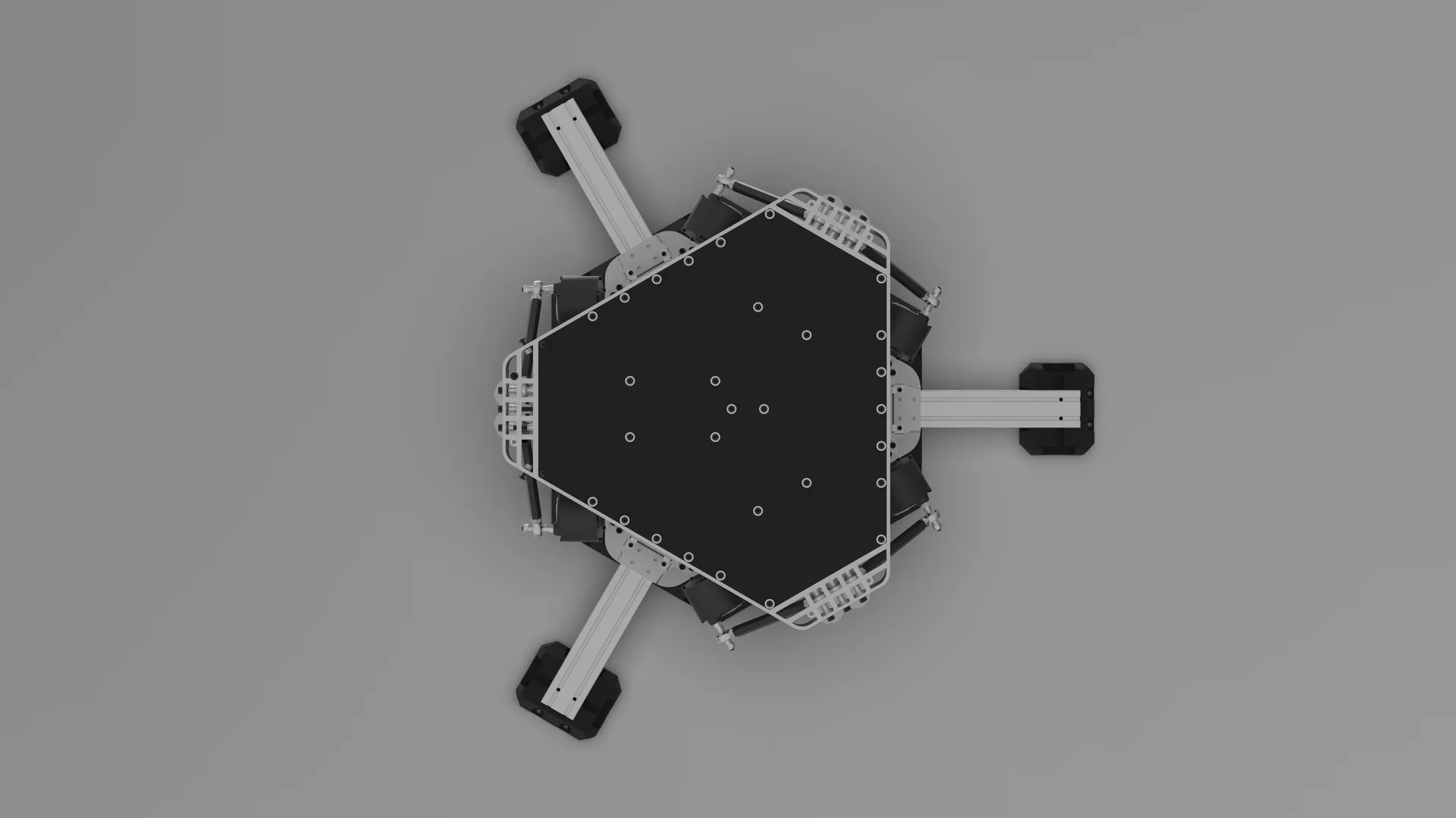
Because the platform moves through all six axes rather than two, it reproduces the surge of braking, the sway of a lane change and the heave of a kerb strike together, in the combination a real vehicle produces them. Separating those cues — giving pitch and roll and approximating the rest — is where a driver stops trusting the rig, and a driver who does not trust the rig gives you data about the rig.
The work it suits
Chassis, suspension, tyre and damper direction with a human in the loop rather than pure simulation.
Put a driver in front of your sensor and decision stack to study handover, edge cases and comfort.
Evaluate displays, controls and motion comfort under motion cues that are repeatable between sessions and between subjects.
Where it sits
This is a research-grade platform at lab scale. It is not a proving-ground rig, not a full driving simulator, and not a certified test facility — and it is priced accordingly.
Drive it from a vehicle-dynamics model over the open interface, alongside the tools your team already runs. Anything that can emit a six-axis pose over UDP can command it.
University automotive laboratories, small and mid-size R&D teams, and Tier-1 groups who need a driver in the loop more often than a proving ground allows.
The platform is $4,899.99 and the PDK Racer $6,299.99 — orders of magnitude below the motion bases in most driver-in-the-loop laboratories, and openly published rather than quoted.
Keep reading
The page this whole discipline turns on: which two points, measured how.
Why a loop that closes on the motor shaft is only as good as what comes after it.
For a deployment, a programme, or a question a page cannot answer.